Manufacturing Robotics Guide (2026)
Compare 20+ cobots and industrial arms by application type
5
Robot Types
welding through cobots
24/7
Operation
lights-out capable
No-code
Cobot Programming
hand-guiding and teach pendants
Welding & Fabrication
Robotic welding cells for consistent bead quality across high-volume production.
Assembly & Pick-and-Place
Cobots and SCARA robots for assembly, machine tending, and parts handling.
Quality Inspection
Vision-equipped robots for inline defect detection and dimensional verification.
Material Handling
Conveyor systems, palletizers, and automated material transport.
Collaborative Cobots
Force-limited robots designed to work alongside human operators without caging.
What's your return?
Estimate your ROI from manufacturing robotics based on your operation.
Annual productivity gain
$224,000
Total cell cost (est.)
$150,000
Payback period
9 months
How to choose the right robot
Cobots vs Industrial Arms
Cobots ($25K-$80K) work alongside humans without caging — ideal for high-mix, low-volume. Industrial arms ($50K-$400K) deliver maximum speed and payload with safety fencing — best for high-volume dedicated applications.
Implementation Checklist
1) Define exact task parameters (pick/place points, cycle time, payload). 2) Validate end-of-arm tooling with prototypes. 3) Simulate real-world cycle times. 4) Map integration scope. 5) Budget operator training (24-40 hrs). 6) Complete risk assessment.
Vendor Questions
Ask about total cell cost, demonstration with your parts, actual cycle time, programming interface, MTBF, annual maintenance, part variability handling, and safety standards compliance.
Regulations & certifications
Key compliance requirements for manufacturing robotics deployments.
ISO 10218-1/2
RequiredInternational standard for industrial robot safety. Part 1 covers the robot, Part 2 covers the robot system and integration.
ISO/TS 15066
RequiredTechnical specification for collaborative robot safety — defines force and pressure limits for human-robot contact.
OSHA Machine Guarding
RequiredOSHA 29 CFR 1910.212 requires adequate safeguarding for robots in manufacturing environments.
ANSI/RIA R15.06
RequiredUS national standard for industrial robot safety — aligns with ISO 10218 with US-specific requirements.
CE Marking (EU)
RecommendedMachinery Directive 2006/42/EC compliance required for robot deployments in EU facilities.
Real-world deployments
How leading organizations are deploying manufacturing robotics.
Automotive Manufacturing
BMW Spartanburg
Challenge
Assembling 1,500+ vehicles daily with increasing model variants requiring flexible production lines.
Solution
Deployed 5,000+ KUKA and FANUC robots for welding, painting, and final assembly with quick-change tooling.
3D Printing / Digital Manufacturing
Voodoo Manufacturing
Challenge
Managing 160+ 3D printers requiring manual plate removal and restart every 8-12 hours.
Solution
Deployed Universal Robots UR10e cobots for automated plate removal, conveyor loading, and printer restart.
Contract Electronics Manufacturing
Flex Ltd
Challenge
High-mix electronics assembly with 500+ product variations requiring frequent line changeovers.
Solution
Deployed Techman TM cobots with integrated vision for PCB inspection, screw driving, and component placement.
Frequently asked questions
How much does a manufacturing robot cost?
Manufacturing robots range from $25,000 for basic cobots to $400,000+ for large industrial arms. Complete robotic work cells (robot + tooling + safety + integration) cost 2-3x the robot alone: $75K-$250K for cobot cells, $200K-$1M+ for industrial cells.
What is a collaborative robot (cobot)?
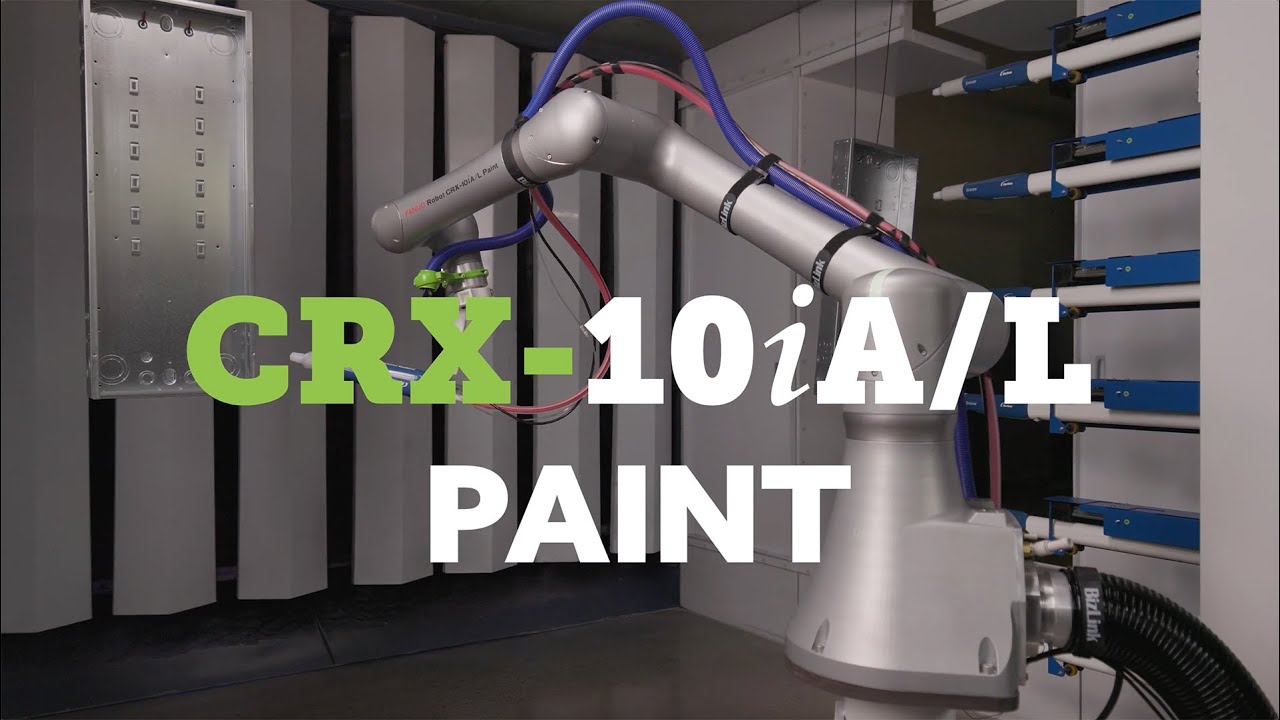
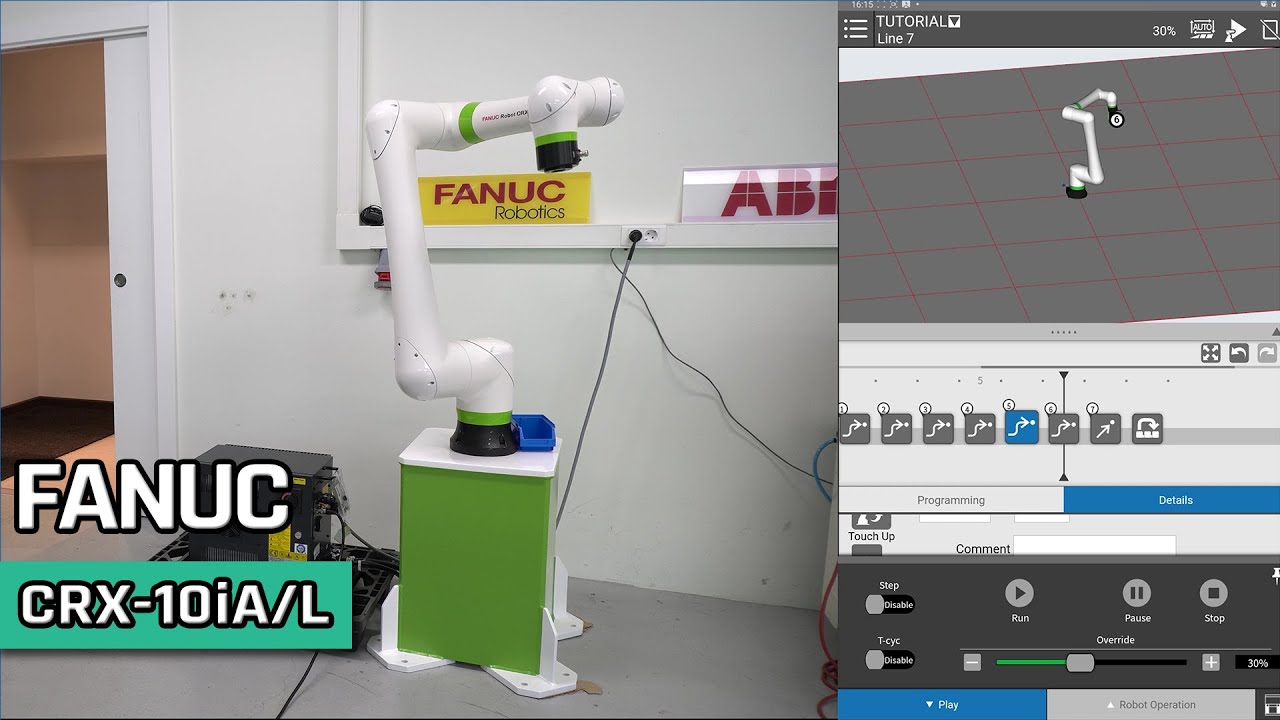
A cobot is designed to work alongside humans without safety caging, using force-limiting technology and collision detection. Major brands: Universal Robots (UR5e, UR10e, UR20), FANUC CRX, ABB GoFa, Techman TM. Ideal for high-mix production with frequent changeovers.
How long does robot setup take?
Simple cobot deployments take 1-4 weeks. Complex industrial cells with custom tooling take 8-16 weeks. Critical path: end-of-arm tooling design (4-8 weeks) and system integration (2-4 weeks). Plan for 1-2 week production ramp-up.
Do I need a programmer on staff?
Modern cobots are designed for non-programmer operation via hand-guiding and graphical interfaces. Industrial robots still benefit from dedicated programmers for complex applications. Many integrators offer remote programming support as a service.
What ROI can I expect?
Typical deployments achieve 30-50% productivity gains and payback in 12-24 months (single shift). Multi-shift operations see 6-12 month payback. Additional ROI from 50-90% defect reduction, less scrap, and fewer worker comp claims.
Newsletter
Get weekly manufacturing robotics intelligence
New robots, deployment insights, ROI benchmarks, and industry analysis delivered every Tuesday.
No spam. Unsubscribe anytime. Join 2,000+ industry professionals.
Find your manufacturing robot
Browse all 186 robots in manufacturing robotics with specs, scores, and pricing.